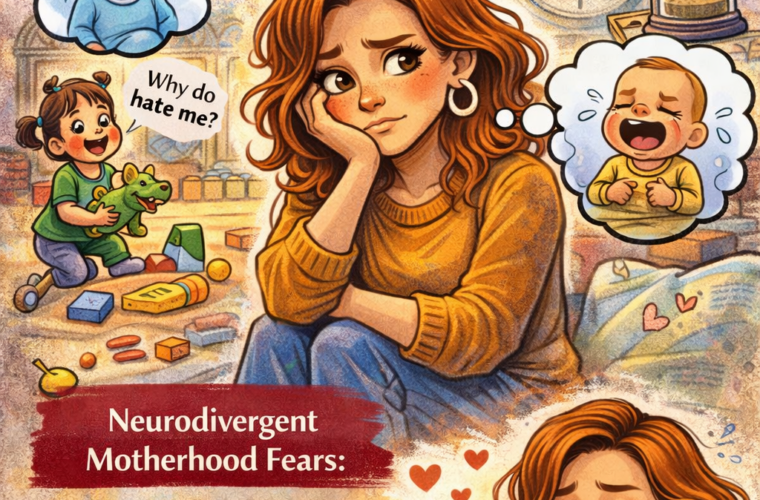
Hey there, friends! It’s Amanda, your go-to voice known as the neurodivergent millennial. Today, I’m taking a deep dive into a topic that’s been on my mind for a long time: motherhood—specifically, what it means to even contemplate becoming a mother as someone living with Autism and ADHD (AuDHD).
Before we get too far into this, let me clarify that I’m not a mother yet, and to be completely honest, I’m not entirely sure if I ever will be. The complexities and challenges that come with the territory are daunting to think about, but they have shaped my perspectives profoundly. This article has been influenced by conversations with friends and fellow neurodivergent individuals who are navigating the tumultuous waters of parenting.
As an autistic with ADHD, I often grapple with social-emotional processing and executive functioning challenges. This means that dealing with emotional regulation and managing others’ expectations can feel like wandering through a labyrinth—only to realize that, at times, the exit is nowhere in sight.
It often feels like we live in a world driven by personal gain and greed. Children become pawns in games of ambition, often without the ability of parents to truly understand how to teach them the nuances of life. I entered this world as someone whose existence was desired by another, but not necessarily wanted for me. This raises the question: Why would I consider bringing a child into a world that doesn’t always value their wellbeing?
I often struggle with the concept of unconditional love. It’s a foreign concept to me, and the thought of imposing that ambiguity onto a child feels overwhelming. In a recent conversation with a close friend who has a spirited five-year-old daughter, she reminded me that having a child could teach me profound lessons about love and connection—if I’m willing to invest the effort. But then comes another fear: the possibility of resentment.
I worry about the sacrifices that naturally accompany motherhood. I can’t shake the thought that these sacrifices might morph into resentment, especially considering my own childhood experiences where I often felt like a burden to my parents. Yet, I also acknowledge the joy that comes from seeing a child explore the world, learn new things, and find happiness in simple moments. That exhilaration is a captivating prospect.
Age is also a factor that weighs heavily on my mind when contemplating motherhood. With increasing risks to both mother and baby as I continue to grow older, the decision becomes laden with layers of implications. It brings to light societal pressures that often push us towards parenting, prompting us to really evaluate what we want for ourselves, separate from what others expect or hope for.
At the end of the day, I remind myself that recognizing fear is the first step towards addressing it. Analyzing these feelings is crucial in understanding their origins—whether they stem from personal experiences or societal teachings. The fear of resentment? That’s rooted in my own upbringing and the perception of sacrifice I perceived from my parents.
Ultimately, I believe it’s crucial to have open conversations about these feelings. It’s important to know that fearing motherhood doesn’t make me a bad person, let alone a bad potential mother. It simply means I’m trying to navigate a complex emotional landscape that comes with neurodivergence and societal expectations.
So, for now, I will continue to explore what this means for me, acknowledge my fears, and engage in conversations about the intricate experience of motherhood. I may not have all the answers yet, but I’m committed to understanding more about myself and the world of parenting.
Until next time, this is @neurodivergentmillennial signing off! ❤️